Flat-Pack Delivery to Reduce Impact: Responsible Transport by Architecture Intérieure du Vin
Each piece of furniture is designed to be beautiful, durable, and intelligently transported.
Designing a piece means thinking not only about its form and function but also about what comes before and after: manufacturing, assembly, installation, and the journey to its final place.
We have chosen a flat-pack delivery approach to reduce environmental impact while providing our clients with a smooth and flexible experience.
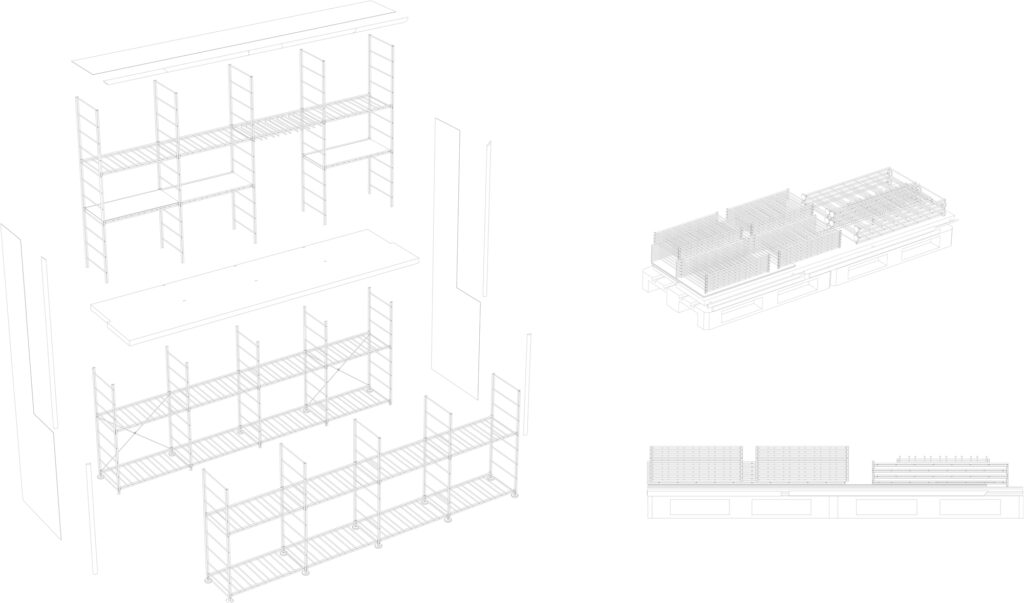
Transporting Less Air, Thinking More Efficiently
Inspired by the rational principles of “flat-pack” design, our approach focuses on minimizing transport volume. Nearly all our furniture is delivered disassembled, in kits, on pallets or in boxes, depending on weight and size. Ladders are paired, shelves are grouped in sets of two to ten, and only a few large wooden structures—such as the Counter Collection—travel assembled from our workshops.
This simple method helps limit unnecessary trips and optimize every pallet.
Less volume means fewer trucks on the road, which directly translates to lower carbon emissions.
Did you know that furniture transport accounts for up to 50% of its total environmental impact (source: ADEME GHG database)?
With optimized pallets, we reduce that figure by around 30% for our standard deliveries.
The Intelligence of Packaging
Every package is made from recycled and recyclable cardboard.
Some formats have been standardized to streamline preparation and reduce material waste.
Each part is carefully protected, labeled, and documented: identification tags, assembly instructions, and plastic pouches for clarity and convenience.
These often-invisible details ensure a smooth, reassuring delivery experience—whether installation is handled by our teams or by the client.
When our teams install on-site, components travel in protected bulk shipments, further reducing unnecessary packaging and simplifying handling.
A Responsible and Concrete Approach
Flat-pack delivery is a deliberate choice: responsible transport, controlled logistics, and design considered as a whole.
Benefits for the client
- Modular furniture: elements can be arranged to suit the space and needs.
- Secure transport: reduced risk of damage during transit.
- Simplified installation: clear instructions and labeled parts.
- Streamlined experience: less packaging to manage, easier delivery.
Because a well-designed piece extends to its packaging, elegance and simplicity remain the true markers of sustainability.
FAQ – Flat-Pack Delivery and Environmental Impact
Why does flat-pack delivery reduce environmental impact?
Transporting disassembled furniture reduces volume, meaning fewer trucks, less fuel consumption, and a smaller carbon footprint.
Are all your pieces delivered flat-packed?
Almost all—only large structures like the Counter Collection are shipped assembled for easier installation.
How are your pieces protected during transport?
Each component is wrapped in recycled, recyclable cardboard with clear labeling and assembly guides to ensure safe arrival.
What are the benefits for the client?
Modular furniture, easier setup, less packaging to handle, and more accessible delivery.
Does your environmental approach go beyond transport?
Yes. From material selection to pallet optimization and route planning, every step is designed to minimize environmental impact.
Is flat-pack only about ecology?
No—it’s also about smart logistics and thoughtful design, making our furniture more accessible, practical, and cost-efficient for the client.
Delivering flat is not just a logistical or economic decision—it’s a conscious commitment to the planet and to our clients.
Every piece we design is considered down to its packaging, every pallet optimized to limit carbon emissions, and every delivery carried out with care and precision.
Design meets the intelligence of transport to create elegant, durable, and responsible furniture.
To discover :

Designing a Professional Wine Cellar in Sancerre: Modularity, Elegance, and Performance
In the heart of the wine village of Sancerre, an emblem of the Centre-Val de Loire, four estates joined forces to create a shared space dedicated to wine sales and tastings: Vignerons La Cave.

Alcohol-Free Wine Cellar: Preservation, Temperature and High-End Hybrid Design
Today, dealcoholized wines, alcohol-free spirits, premium 0.0% beers, gastronomic kombuchas and botanical creations are increasingly present in Michelin-starred restaurants, luxury hotels, private clubs and contemporary residences.
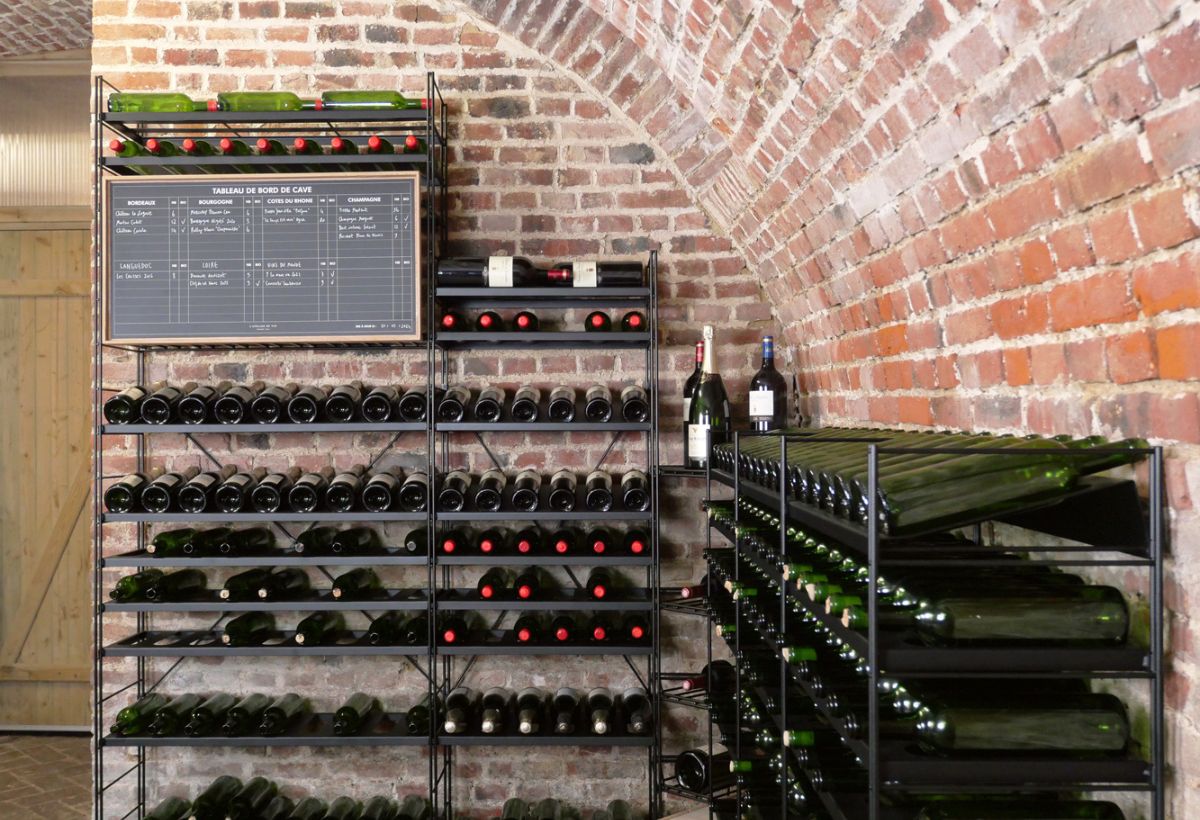
Skin Collection – Contemporary Elegance at the Heart of Wine Cellar Furniture Design
Conceived as a work of interior architecture, the Skin Collection blends design, technical precision, and modularity. Inspired by major European modernist movements and the legacy of the decorative arts, it offers a refined, graphic interpretation of wine cellar furniture.