Alcohol-Free Wine Cellar: Preservation, Temperature and High-End Hybrid Design
The world of wine is evolving. Practices are diversifying, rituals are transforming, expectations are expanding.
Today, dealcoholized wines, alcohol-free spirits, premium 0.0% beers, gastronomic kombuchas and botanical creations are increasingly present in Michelin-starred restaurants, luxury hotels, private clubs and contemporary residences.
This evolution brings a new challenge, both technical and aesthetic:
how can alcohol-free beverages be given a setting worthy of great crus?
Beyond simple preservation, the objective is now to design hybrid spaces where specific thermal requirements coexist with high-end presentation. Architecture Intérieure du Vin explores these new configurations with the same rigor applied to traditional aging cellars.
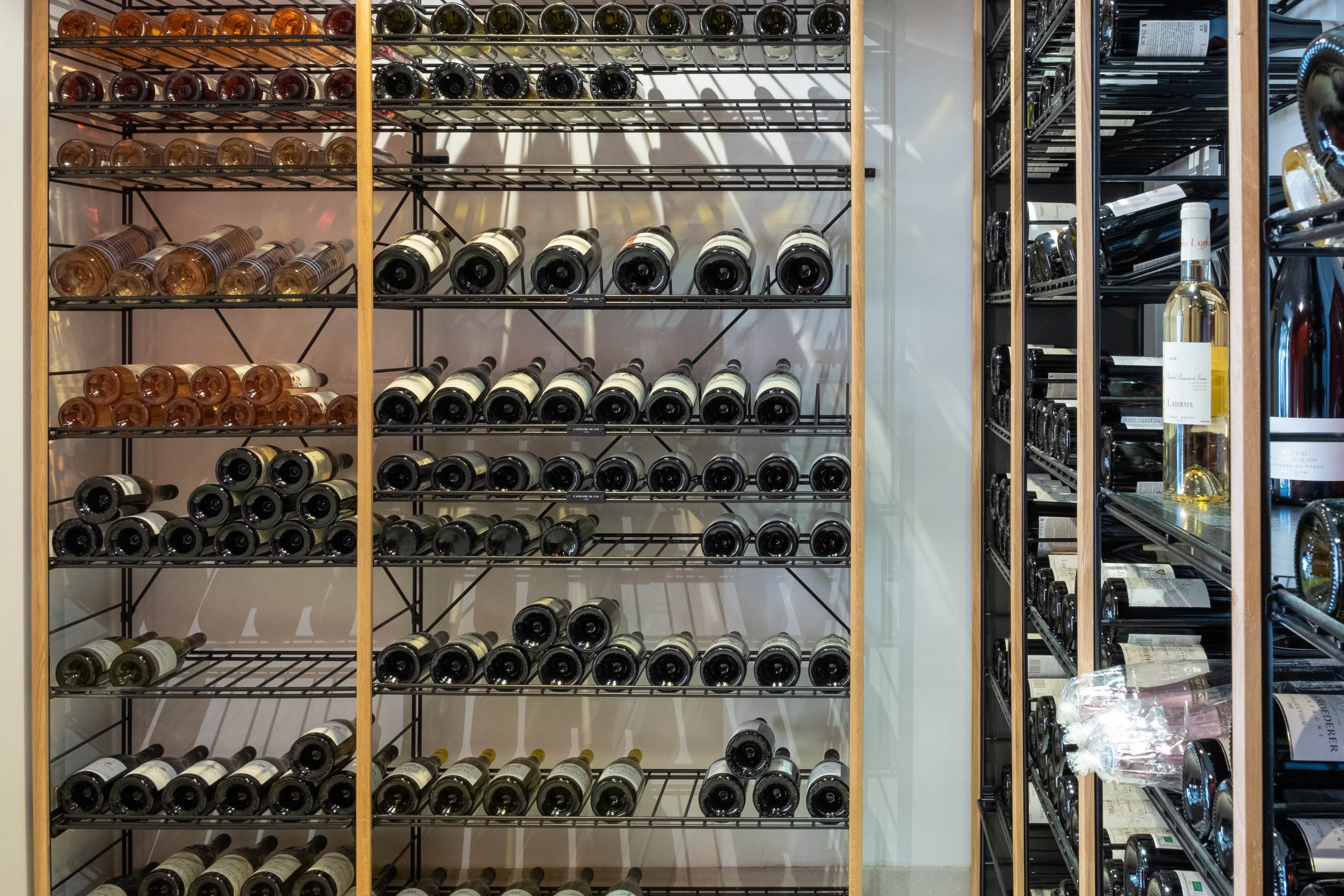
Alcohol-Free Wine: A Lasting Transformation of Habits
Long perceived as marginal, dealcoholized wine is now part of a profound shift in tasting practices.
This movement does not signal the abandonment of traditional wine. Rather, it reflects:
- a search for balance,
- a diversification of experiences,
- a more inclusive form of hospitality,
- greater attention to moments of consumption.
In fine dining establishments, food and alcohol-free beverage pairings are now crafted with the same precision as classic wine selections.
The bottle may sometimes change in nature, but the ritual remains: selecting, presenting, serving at the right temperature, and sharing.
The cellar thus becomes a universal space, capable of accommodating every expression of taste.
Is a Specific Cellar Required for Alcohol-Free Wine?
A frequent question arises: is a traditional wine cellar suitable for preserving alcohol-free beverages? In most cases, the answer is yes.
However, several parameters must be considered. Even without alcohol, wine remains:
- sensitive to temperature fluctuations,
- vulnerable to direct light,
- exposed to oxidation risks,
- dependent on environmental stability.
Alcohol acts as a natural preservative. Its absence may reduce long-term aging potential. This means that thermal and light management become even more critical.
A well-designed alcohol-free wine cellar ensures:
- thermal stability,
- controlled lighting,
- gentle ventilation,
- mechanical protection of bottles.
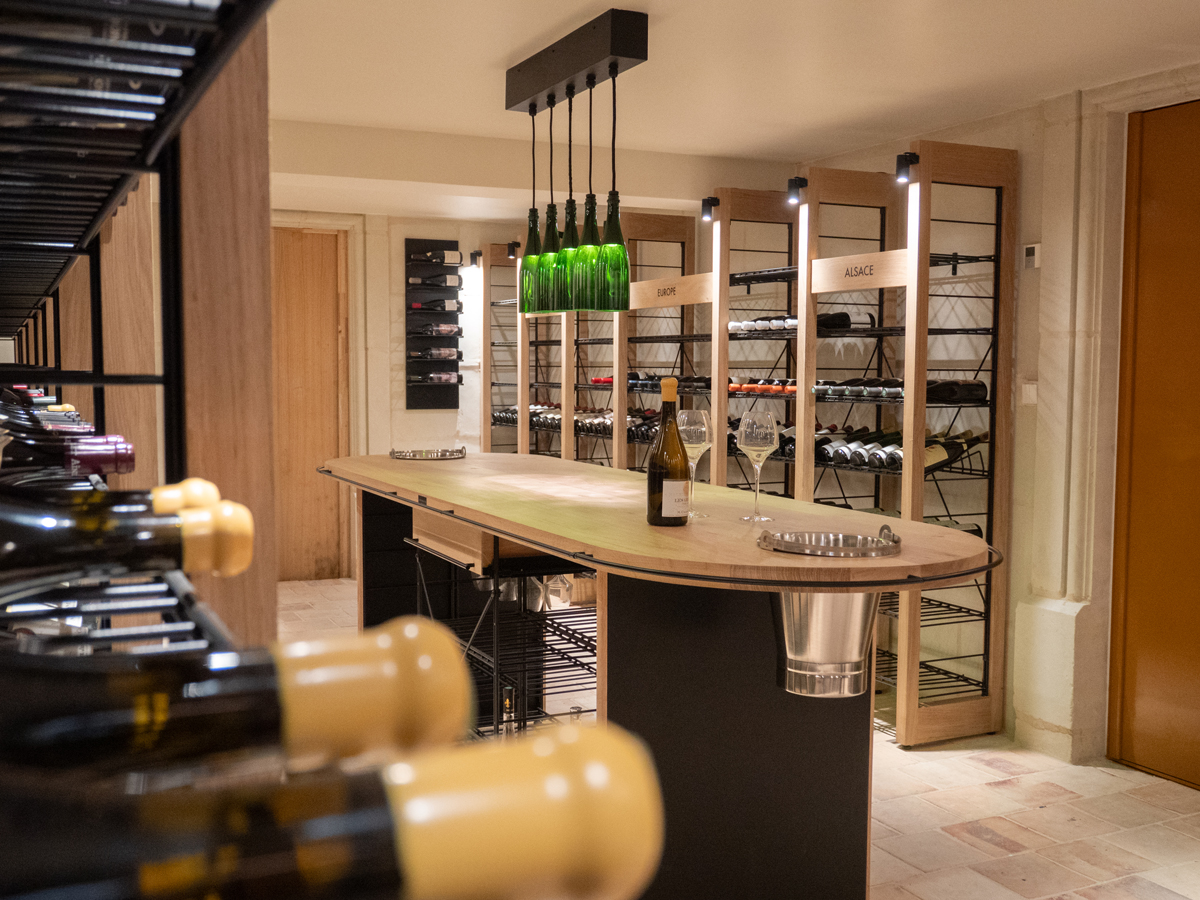
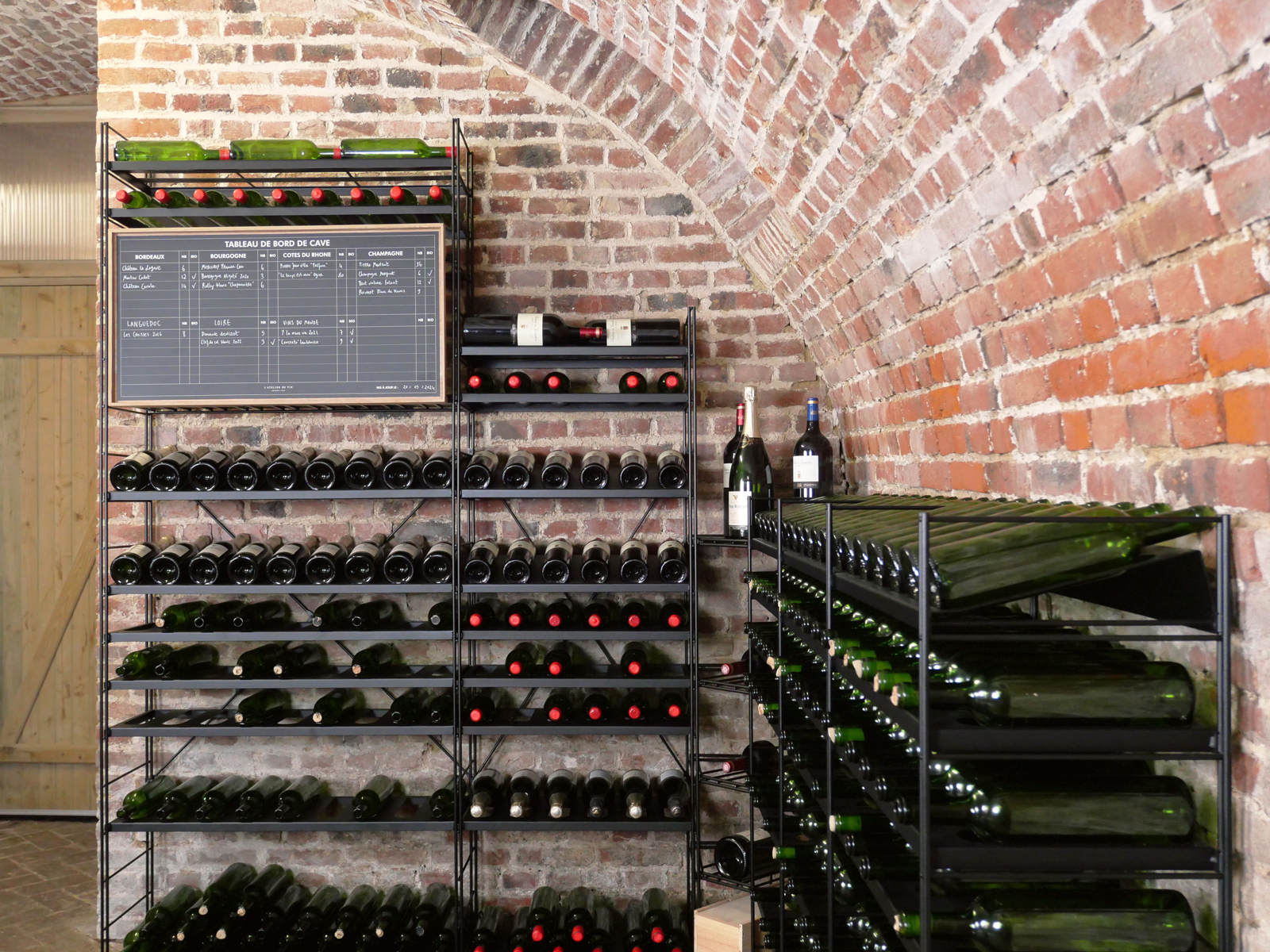
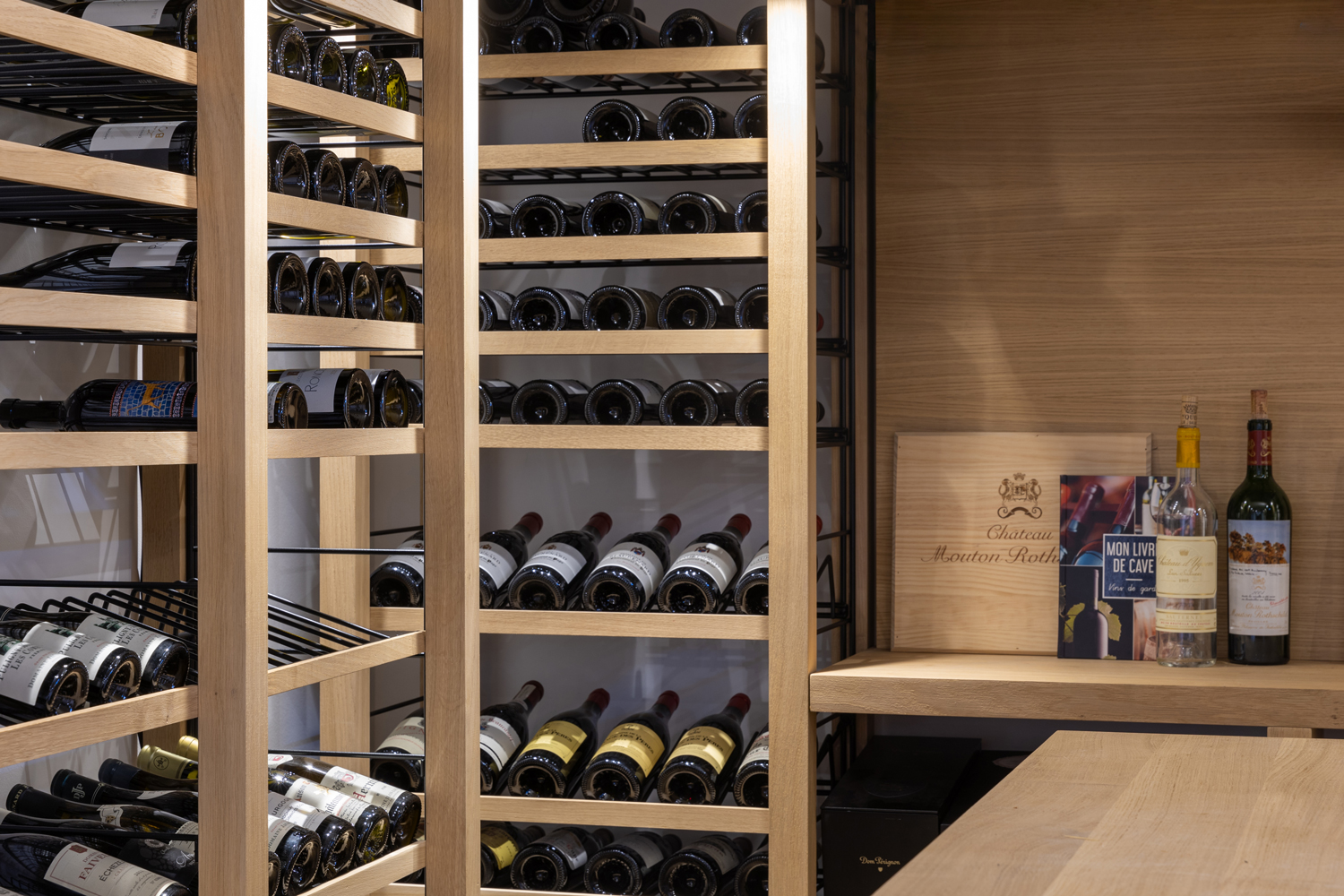
How Should Alcohol-Free Wine Be Stored?
Preserving alcohol-free wine follows principles similar to traditional wine, with certain nuances.
1. Temperature
The ideal storage temperature for dealcoholized wine generally ranges between 10 and 14°C.
- Dealcoholized whites and rosés: 8 to 12°C recommended.
- Dealcoholized reds: 12 to 14°C for optimal aromatic expression.
Abrupt fluctuations are more harmful than the temperature itself. Repeated variation accelerates aromatic evolution and may alter structure.
2. Light
UV rays degrade aromatic compounds. Alcohol-free beverages are no exception.
An alcohol-free wine cellar should favor:
- indirect lighting,
- low-heat LED systems,
- protection from prolonged sunlight exposure.
3. Humidity
Unlike long-aging wines sealed with natural cork, humidity does not always play the same structural role for certain alcohol-free beverages.
However, maintaining moderate humidity helps:
- preserve labels,
- prevent natural corks from drying out,
- protect surrounding materials.
4. Storage Duration
Most alcohol-free wines are designed for relatively prompt consumption. They are not intended for decades-long aging.
A properly designed cellar preserves aromatic qualities over the medium term while ensuring a premium presentation.
Ideal Temperature for No/Low Alcohol Beverages
The term no/low alcohol encompasses a wide range of creations: dealcoholized wines, alcohol-free spirits, premium 0.0% beers, gastronomic kombuchas and botanical infusions.
Each category has specific thermal needs to fully express its aromatic potential.
| Beverage Type | Recommended Storage Temperature |
| Dealcoholized White & Rosé Wines | 8-12°C |
| Dealcoholized Red Wines | 12-14°C |
| Alcohol-Free Spirits | 10-15°C |
| Gastronomic Kombuchas | 6-10°C |
| Premium 0.0% Beers | 6-8°C |
A modular cellar integrating multiple temperature zones optimizes the preservation of these hybrid collections.
Hybrid Cellars: Combining Wine and Alcohol-Free Beverages in One Space
Contemporary cellars are no longer exclusively dedicated to fine wines. They are becoming:
- experiential spaces,
- places of dialogue,
- showcases of modern hospitality.
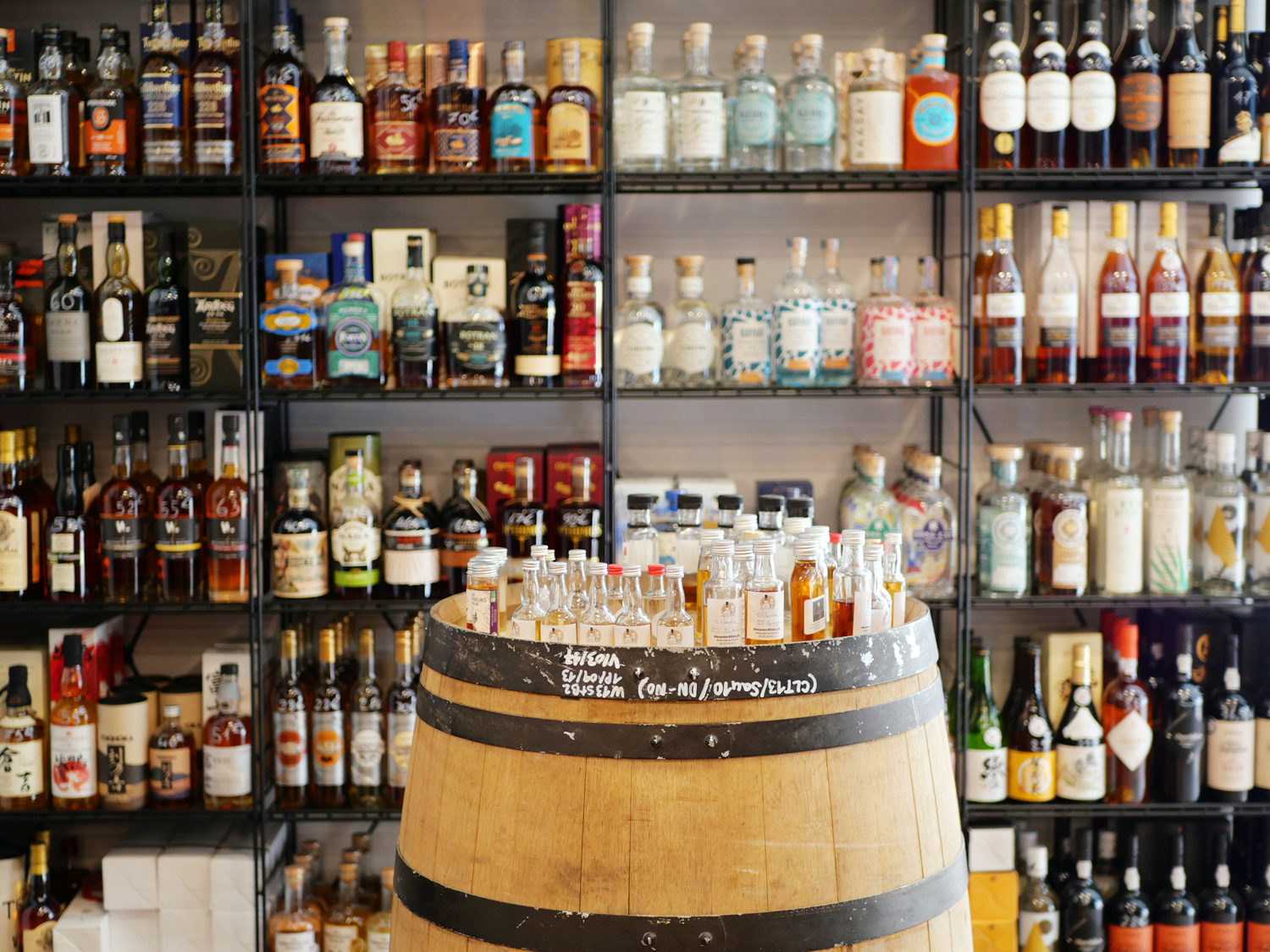
Combining traditional wines and alcohol-free beverages within a hybrid cellar reflects an inclusive and contemporary approach. In a luxury hotel, gourmet restaurant or private residence, this hybridization allows:
- expanded offerings,
- adaptable tasting moments,
- accommodation of diverse preferences.
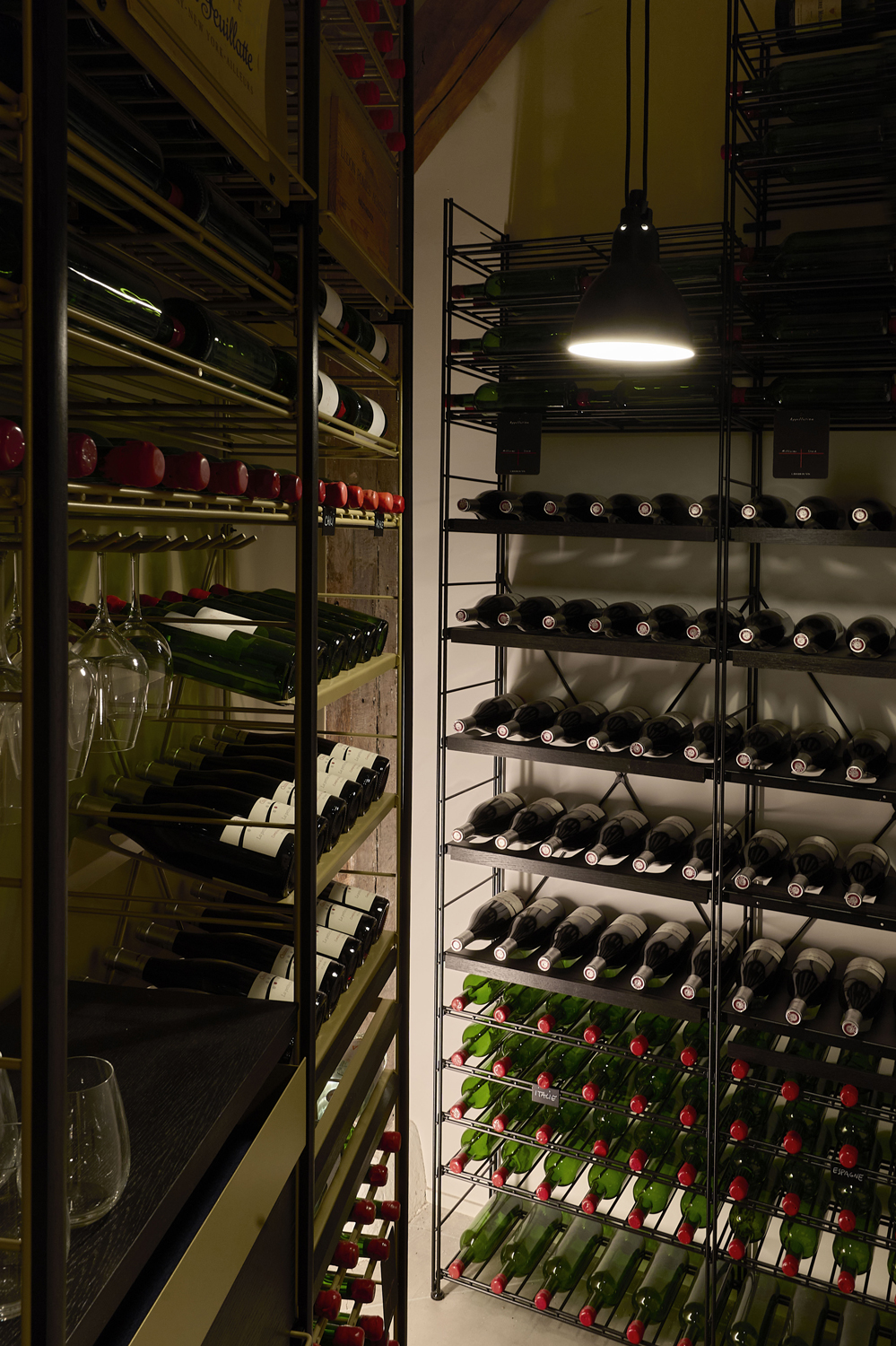
The adjustable modules developed by Architecture Intérieure du Vin facilitate this harmonious coexistence.
Designing an Alcohol-Free Wine Cellar: Architectural Principles
The challenge is not only technical. It is also aesthetic and scenographic.
Modularity
- Alcohol-free bottle formats vary considerably:
- elongated bottles,
- minimalist flasks,
- contemporary large formats.
Modular furniture adapts supports and ensures coherent presentation.
Lighting Design
Rosé, golden and amber tones contribute to the sensory experience. Integrated lighting enhances:
- the depth of the liquid,
- the texture of the glass,
- the sophistication of labels.
Aesthetic Cohesion
Pairing bottles with:
- dedicated glassware,
- decanters,
- specialized books,
- table art accessories
reinforces the cellar’s identity.
The alcohol-free wine cellar becomes a curated collection space, not merely a storage area.
Alcohol-Free Wine Cellars in Hospitality and Fine Dining
In professional settings, managing alcohol-free beverages requires a strategic approach.
A gastronomic establishment must:
- guarantee consistent temperature,
- ensure optimal stock rotation,
- maintain impeccable presentation.
A hybrid cellar enables:
- optimized space management,
- enhanced visual display,
- seamless integration of emerging trends.
For hotels, the cellar also becomes an element of interior architecture, contributing to the overall guest experience.
Traditional Wine vs. Alcohol-Free Wine Preservation: Key Differences
While the core principles are similar, some distinctions should be highlighted:
- Traditional wine may benefit from long-term aging.
- Dealcoholized wine is generally intended for earlier consumption.
- Alcohol plays a stabilizing role.
- Its absence makes thermal stability even more crucial.
In both cases, however, a properly designed cellar remains the optimal preservation environment.
FAQ – Wine Cellars and Alcohol-Free Beverages
Can alcohol-free wine be stored in a traditional wine cellar?
Yes, provided a stable temperature between 10 and 14°C is maintained and light exposure is controlled.
Do alcohol-free wines age?
They are generally designed for shorter-term consumption than aging wines.
Should wine and alcohol-free beverages be separated?
No. A hybrid cellar allows harmonious and contemporary organization.
Are alcohol-free beverages sensitive to UV light?
Yes, prolonged exposure can alter aromatic compounds.
Is a professional cellar necessary in hospitality settings?
Yes, to ensure thermal stability, premium presentation and optimal inventory management.
A Natural Evolution of the Art of Hospitality
Opening the door to alcohol-free beverages does not mark a break with wine culture. It broadens the field of possibilities.
Contemporary cellars now embody:
- inclusive hospitality,
- attention to detail,
- celebration of the bottle, whatever its nature.
Architecture Intérieure du Vin designs bespoke cellars where traditional wines and alcohol-free creations coexist with equal technical and aesthetic rigor.
Sublimating the bottle, whatever it may hold.
Your collection deserves a bespoke setting. Whether hybrid or dedicated, contact Architecture Intérieure du Vin to transform your tasting space.
To discover :

Designing a Professional Wine Cellar in Sancerre: Modularity, Elegance, and Performance
In the heart of the wine village of Sancerre, an emblem of the Centre-Val de Loire, four estates joined forces to create a shared space dedicated to wine sales and tastings: Vignerons La Cave.
Flat-Pack Delivery to Reduce Impact: Responsible Transport by Architecture Intérieure du Vin
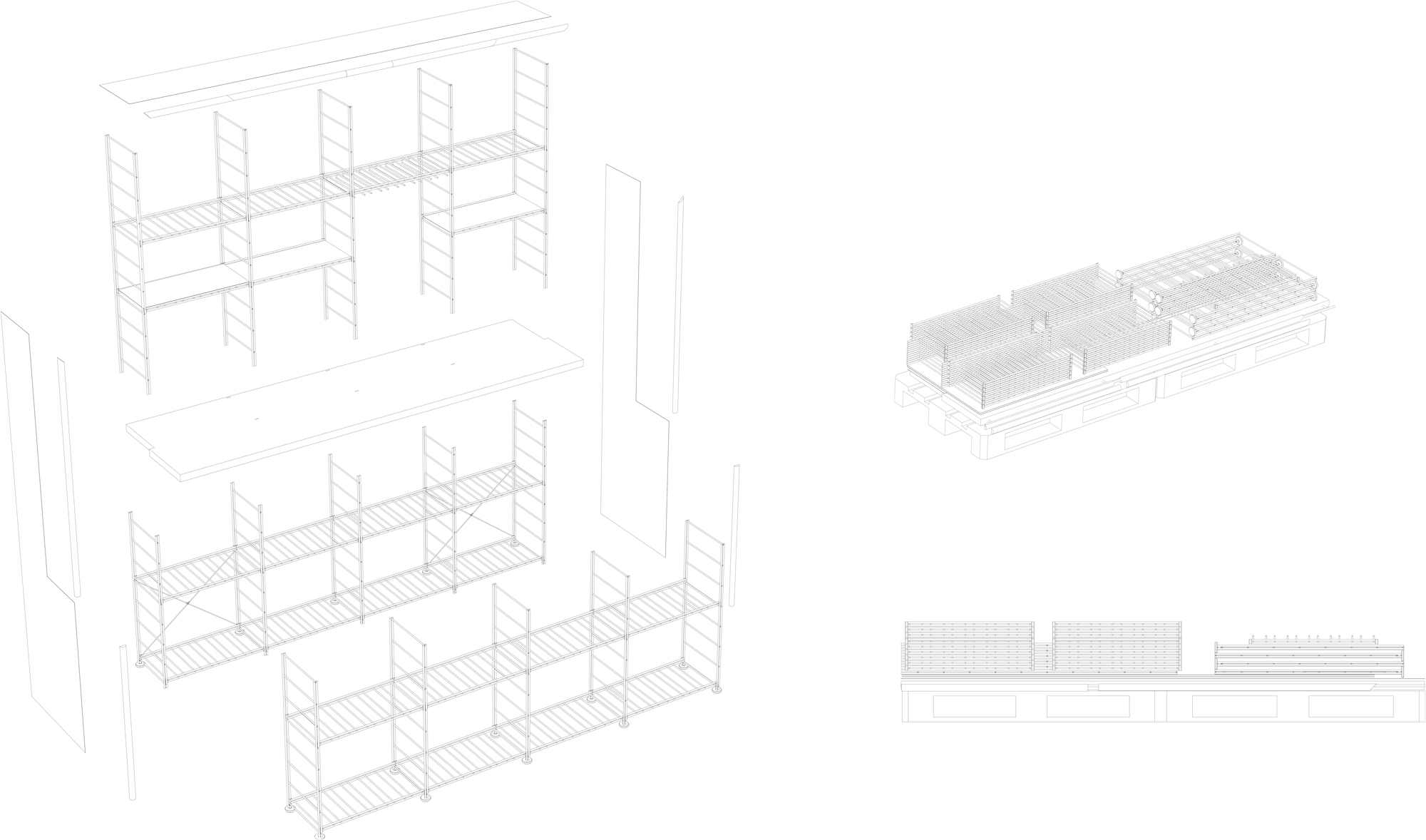
Each piece of furniture is designed to be beautiful, durable, and intelligently transported. Designing a piece means thinking not only about its form and function but also about what comes before and after: manufacturing, assembly, installation, and the journey to its final place.
Skin Collection – Contemporary Elegance at the Heart of Wine Cellar Furniture Design
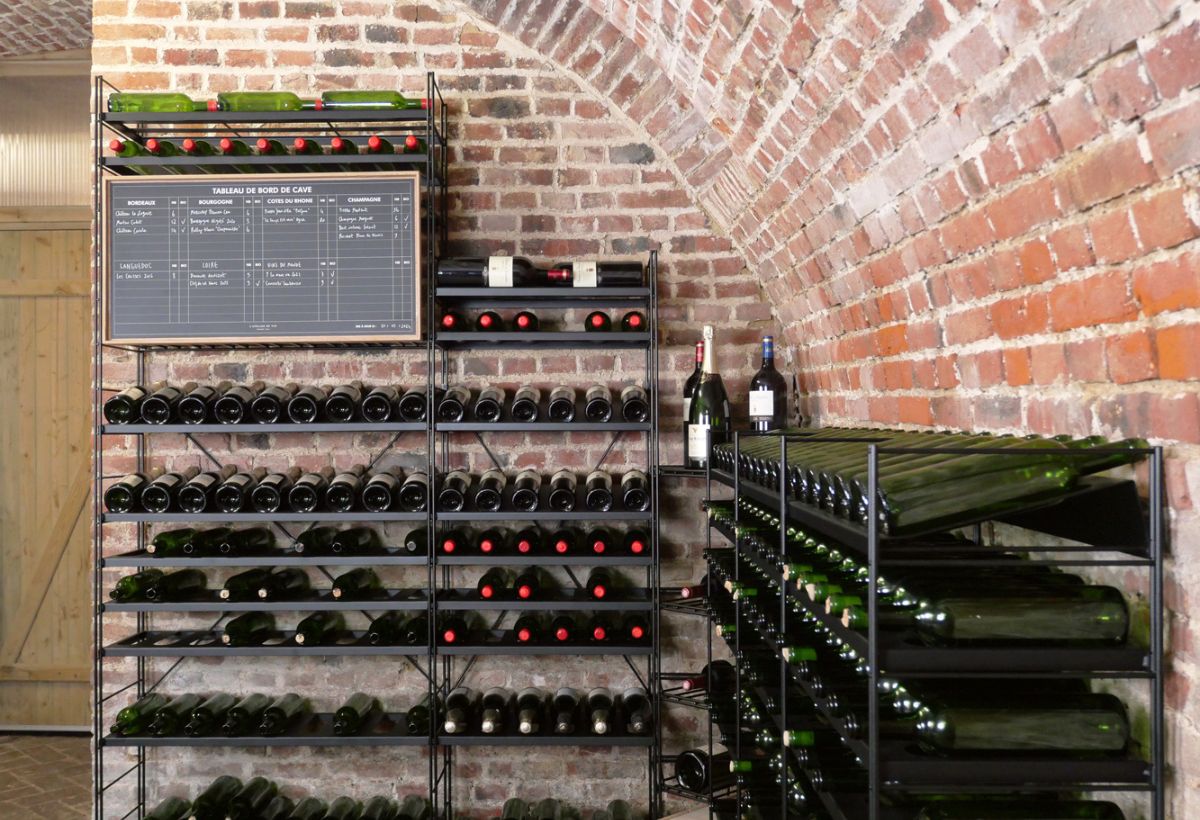
Conceived as a work of interior architecture, the Skin Collection blends design, technical precision, and modularity. Inspired by major European modernist movements and the legacy of the decorative arts, it offers a refined, graphic interpretation of wine cellar furniture.